
Behind the S-Curve · Explained · Growth Strategy
Green energy for businesses: five types, ready now or still on the way
Green energy for businesses comes in many types, including solar, wind, biomass, low-emissions hydrogen, and wave and tidal power; in 2025 the first three were commercial worldwide, while the last two were still early.

Contents (8)
- The tension
- The insight
- The tension
- What leaders do
- The insight
- What leaders do
- Sources
The tension 01 / 08
Key takeaways in 60 seconds
Green energy comes in many types, among them solar, wind, biomass, hydrogen, and wave and tidal power. The United Nations' common renewables add geothermal and hydropower 1; hydrogen is mostly made from natural gas and coal 7
Solar leads. It had 2,392 GW installed at the end of 2025, the most of any renewable 3, and took about 75% of that year's renewable additions 2
Onshore wind and solar were the two cheapest sources of new power in 2025: USD 33 and USD 44 per megawatt-hour, against about USD 358 for tidal stream and USD 454 for wave 5
Low-emissions hydrogen is still tiny: almost 1 million tonnes in 2025 against demand above 100 million, and costlier than fossil hydrogen in most regions near term 6
Thai firms can buy green power without installing anything. The UGT1 tariff of Thailand's Energy Regulatory Commission (ERC) adds a per-unit premium and a certificate naming the source plants 9
The insight 02 / 08
What is green energy, and which types are there?
A definition, then where the five stand in 2026.
Green energy
Green energy is energy from natural sources replenished faster than they are used, such as sunlight and wind, emitting far less than burning fossil fuels, per the United Nations' description of renewable energy 1
Green energy types include the United Nations' common renewables: solar, wind, geothermal, hydropower, ocean energy and bioenergy 1. The first edition picked five for 2025. Hydrogen is the odd one out, as it has to be produced; in 2024 most was made from natural gas and coal, and low-emissions hydrogen was under 1% 7.
Exhibit 1
Five green energies: three generate commercial power, two are still early
How to read: capacity at the end of 2025; hydrogen is 2025 output.
| Energy | Made from | Scale, 2025 | Stage |
|---|---|---|---|
| Solar | Made fromSunlight, via panels or mirrors 1 | Scale, 20252,392 GW 3 | StageMainstream: about 75% of 2025 additions 2 |
| Wind | Made fromWind on land and at sea 1 | Scale, 20251,291 GW 3 | StageMainstream: 158.7 GW added 2 |
| Biomass | Made fromWood, crop residues, manure, organic waste 1 | Scale, 2025154 GW 3 | StageCommercial: 3.4 GW added 3 |
| Hydrogen | Made fromMostly natural gas and coal 7 | Scale, 2025Almost 1 Mt low-emissions, of demand above 100 Mt 6 | StageEarly: costlier than fossil hydrogen 6 |
| Wave and tidal | Made fromMoving seawater 1 | Scale, 20250.5 GW of marine energy 3 | StagePilot to pre-commercial 5 |
The first edition likened a warming planet to a feverish body and green energy to its antibiotic, expecting stronger cures in 2025 Jenosize analysis. Growth came: a record 692 GW of renewables was added in 2025, to 5,149 GW, 85.6% of all new power capacity 2. Yet two of the five energies the first edition expected to rise were still early in 2026 Jenosize analysis.
It also called green energy a golden opportunity for forward-thinking entrepreneurs and stock investors, cutting long-term costs and building image as consumers prioritise sustainability Jenosize analysis. The cost case holds: over 90% of new utility-scale renewable projects in 2025 beat the cheapest new fossil option 5. The image case needs proof (read more: what is green business).
The insight 03 / 08
Solar and wind: the two cheapest sources of new power in 2025
The first edition's 2025 calls, kept as published (the old site records no date), then today's data.
1. Solar energy
The first edition called solar the most popular green energy, growing as panels got more efficient and cheaper. By installed capacity that holds: solar added 511 GW in 2025, about 75% of new renewables 2, and its cost has fallen 89% since 2010 5. By power generated, hydropower still leads 1; the IEA expects solar to pass it in 2029 4.
- Construction: solar built into building materials becomes the standard for Net-Zero Energy Buildings.
- Automotive: solar roofs on electric cars extend range and cut reliance on charging stations.
- Agriculture: solar irrigation and smart greenhouses raise yields and cut costs.
- To watch: transparent panels that replace windows; better storage such as new lithium-ion batteries.
Storage moved fastest: four-hour utility-scale batteries fell close to 30% in cost in 2025, to about USD 140 per kWh, and perovskite cells are nearing commercial use 5.
2. Wind energy
The first edition said wind was growing fast, especially in long-coastline countries like Thailand, with bigger turbines producing more in light winds. Turbines are indeed taller, with larger rotors 1. Wind added a record 158.7 GW in 2025, nearly three-quarters in China 2; in Thailand it generated about 2% of electricity in 2023 8.
- Energy: large offshore wind farms raise the share of clean electricity.
- Logistics: cargo ships pair sails with small wind turbines to burn less fossil fuel.
- Agriculture: small farm turbines lower energy costs and make farming more sustainable.
- To watch: bladeless turbines that are safer for birds and quieter; storing wind power as hydrogen for calm days.
Offshore wind slowed: in October 2025 the IEA cut its five-year forecast by over 25% after a US policy shift and costlier, delayed or cancelled projects elsewhere 12. Onshore capacity should still rise over 70% to 2,040 GW by 2031 4.
Exhibit 2
Wave and tidal power costs at least 8 times as much as new onshore wind or solar
How to read: lifetime cost of power in 2025, USD/MWh; the bottom two rows are estimates for current projects.
The tension 04 / 08
Biomass, hydrogen, wave and tidal: the 2025 calls vs reality
Biomass is closest to Thai business; the other two lag the first edition's calls.
3. Biomass energy
The first edition described biomass as energy from wood scraps, plant waste or farm byproducts, and expected more energy per tonne by 2025 Jenosize analysis. In Thailand, bioenergy generated about 14% of electricity in 2023, the most of any Thai renewable 8; worldwide, capacity grew only 3.4 GW (2.3%) in 2025 3. The United Nations notes biomass still emits, though less than fossil fuels, and plantations can drive deforestation 1.
- Agriculture: farm waste turned into energy gives farmers extra income.
- Waste management: organic waste turned into energy cuts what goes to landfill.
- Manufacturing: more plants, especially high-heat ones, switch from fossil fuels to biomass.
- To watch: second-generation biofuels from non-food materials; small biogas units for homes and communities.
The IEA expects biogas output to grow almost a fifth by 2031, all from biomethane; direct heat from bioenergy, solar thermal and geothermal was about 60% of modern renewable heat in 2025 4.
4. Hydrogen energy
The first edition called hydrogen the fuel of the future, made from water without pollution, and expected green hydrogen to be cheap enough for wide use by 2025. The IEA's last two reviews disagree.
What the first edition expected for 2025
- Automotive: fuel-cell cars and trucks gain ground, especially for long-distance transport.
- Steel: hydrogen replaces coal in steelmaking, cutting emissions sharply.
- Aviation: hydrogen aircraft begin commercial testing.
- To watch: more efficient green hydrogen from renewables; safer storage and transport.
What the IEA reported by 2026
- Mostly made from natural gas and coal; low-emissions hydrogen under 1% in 2024 7
- Low-emissions output up 20% to almost 1 Mt in 2025, expected above 1% of production in 2026 6
- The cost gap with fossil hydrogen widened as gas got cheaper and electrolysers dearer 7
- Steel-sector hydrogen tenders in Europe delayed or put on hold in 2024 7
Commercial today: hydrogen in refining and industry, almost all 2025 demand 6, mostly fossil-made 7. Early: low-emissions hydrogen; Europe's first large projects are due in 2026, new uses stay very minor, and near term it costs more than fossil hydrogen except in China, which could compete by 2030 6.
5. Wave and tidal energy
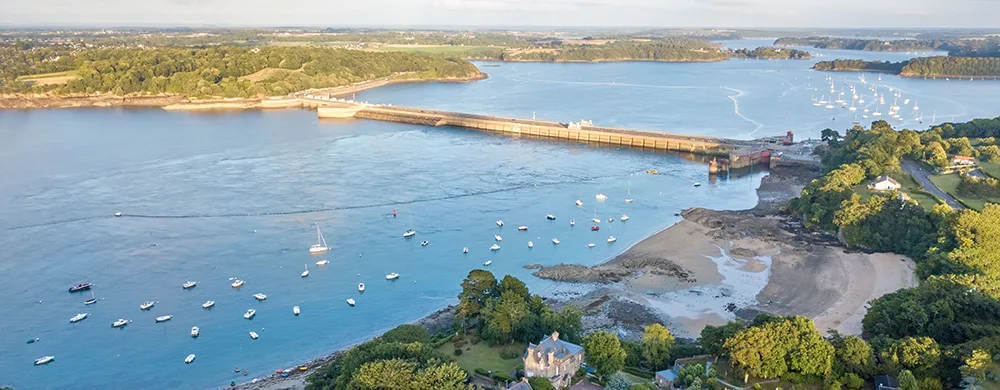
The first edition saw high potential at an early stage, with large pilots in coastal countries by 2025. The United Nations agrees: ocean energy's theoretical potential exceeds human needs, but the systems are early 1. Since 2010 the world has deployed only 43 MW of tidal stream and 27 MW of wave power, over half in Europe 5.
- Energy: large wave and tidal plants diversify clean energy supply.
- Fishing: generation built into fish farms and other marine structures cuts costs.
- Oil and gas: old rigs converted into wave and tidal power stations.
- To watch: buoys that harvest waves and tides at once; small underwater turbines for rivers and straits that spare ecosystems.
Europe has 16 wave and tidal farms (196 MW) due by 2030 and China a 400 MW target 5; all marine energy totalled 0.5 GW at the end of 2025 3.
Two of the five energies the first edition expected to rise were still early in 2026 Jenosize analysis
What leaders do 05 / 08
Best renewable energy options for small companies today
Three routes open now, and one to pilot.
The first edition closed by calling green energy, in a climate crisis, a necessity for long-term survival and growth, and argued a business can succeed while caring for the planet Jenosize analysis. Thailand targets carbon neutrality by 2050 and net zero by 2065, per its COP26 statement, and the Office of the Council of State counts renewables as a green-economy sector 11. Partners and customers will ask for proof Jenosize analysis.
Exhibit 3 · Illustrative
Thai businesses have three clean-energy routes open now, and one to pilot
How to read: one route per row.
| Route | What the sources say |
|---|---|
| Buy UGT1 green power | What the sources sayNormal tariff plus a per-unit premium, with a certificate naming the plant 9 |
| Rooftop solar for own use | What the sources sayNew solar averaged USD 44/MWh in 2025 5 |
| Biomass and biogas for heat | What the sources sayBioenergy: about 14% of Thai electricity in 2023 8 |
| Pilot: hydrogen and ocean power | What the sources sayHydrogen costlier than fossil near term 6; wave and tidal pre-commercial 5 |
Green power from the utility (UGT1)
UGT1 (Utility Green Tariff type 1, unspecified sources) is the normal tariff including Ft plus a premium for renewable energy certificates (RECs) and management, under ERC criteria in the Royal Gazette of 8 Jan 2024 9. The ERC approved a first premium of THB 0.0594 per unit on 28 Feb 2024, from hydropower RECs of the Electricity Generating Authority of Thailand (EGAT); the three state utilities began selling it in 2025 9.
For 2026 the Office of the ERC took a proposed THB 0.0375 premium, 37% lower, to public hearing on 7–19 Jan 2026 9. Type 2 (UGT2) lets customers name their sources 10. Check the rate in force before signing Jenosize analysis.
Rooftop solar and batteries
Where fuel is dear and grids unreliable, households and small businesses in developing economies are turning to affordable solar to steady supply and cut bills, the IEA reports 4; hybrids with batteries already beat USD 75/MWh in many regions 4. A small company with heavy daytime use should start with its own roof Jenosize analysis.
Hydrogen and ocean power belong in partner-backed pilots Jenosize analysis. Clean energy has been a technology trend since 2025 (read more: 8 technology trends); once emissions fall, carbon credits come next (read more: carbon credits).
The insight 06 / 08
Frequently asked questions
Which type of energy will matter most in the future?
The IEA expects solar to supply over three-quarters of renewable capacity growth to 2031 and to become the largest renewable power source in 2029
Which new energy innovations are close to market?
IRENA names perovskite solar cells, cheaper long-duration storage, and wave and tidal stream nearing industrial deployment
What leaders do 07 / 08
How leaders use green energy
One move each for the CEO, CFO and COO, as Jenosize recommends.
CEO
Start where the cost is proven
Onshore wind and solar were the two cheapest sources of new power in 2025 5. Begin with rooftop solar or utility green power Jenosize analysis.
CFO
Price green power in baht per unit
The UGT1 premium is charged per unit on top of the normal tariff 9. Compare it with what your own solar saves Jenosize analysis.
COO
Trial hydrogen only with a partner
Low-emissions hydrogen still costs more than fossil hydrogen in most regions 6. Pilot only where a partner shares the cost risk Jenosize analysis.
How Jenosize helps
Jenosize describes itself as a Business Growth Transformation Partner and was founded in 2011. Our consultants find the real constraints on growth and build the business case for the board. Our technology and AI teams build the shared rails; our marketing and events teams put new propositions in front of real customers. See Jenosize's consulting service.
08 / 08
Sources
Grades: A = primary or official · B = reputable secondary · C = needs checking, never published.
- 1A
United Nations, Climate Action, “What is renewable energy?” Open ↗
The definition of renewable energy, six common sources, turbine size, hydropower as the largest renewable electricity source, ocean energy at an early stage, and the cautions on bioenergy · United Nations website · read 21 Nov 2026
- 2A
International Renewable Energy Agency (IRENA), “Near-700 GW Surge in 2025 Proves Renewable Energy Resilience” (press release on Renewable Capacity Statistics 2026), 1 Apr 2026 Open ↗
692 GW of renewables added (+15.5%) to 5,149 GW, 85.6% of new capacity; solar 511 GW (about 75%); wind 158.7 GW, China 119.4 GW · Intergovernmental agency · read 21 Nov 2026
- 3A
IRENA, Renewable Capacity Highlights 2026 (Mar 2026), PDF Open ↗
Capacity at the end of 2025: solar 2,392, hydropower 1,296, wind 1,291, bioenergy 154 and marine 0.5 GW; bioenergy +3.4 GW (+2.3%) · Official statistics · read 21 Nov 2026
- 4A
International Energy Agency (IEA), Renewables 2026, Executive summary, 6 Nov 2026 Open ↗
Renewables 33% of electricity in 2025 and almost 45% in 2031; solar overtakes hydropower in 2029; onshore wind 2,040 GW; solar for households and small businesses; hybrids below USD 75; biogas and renewable heat · Intergovernmental agency · read 21 Nov 2026
- 5A
IRENA, Renewable Power Generation Costs in 2025 (Jul 2026), PDF Open ↗
2025 electricity costs by technology; over 90% of new renewable projects cheaper than the cheapest new fossil option; solar cost down 89% since 2010; four-hour batteries about USD 140/kWh; perovskite; wave and tidal status; renewables overtaking coal in installed capacity · Official report · read 21 Nov 2026
- 6A
IEA, Global Hydrogen Review 2026, Executive summary, 18 Jun 2026 Open ↗
Hydrogen demand above 100 Mt; low-emissions hydrogen almost 1 Mt (+20%), expected above 1% in 2026; cost against fossil hydrogen; electrolysis above 4 GW; Europe's first large projects · Intergovernmental agency · read 21 Nov 2026
- 7A
IEA, Global Hydrogen Review 2025, Executive summary, 12 Sep 2025 Open ↗
Hydrogen made mostly from natural gas and coal; low-emissions under 1% in 2024; a wider cost gap; European steel tenders delayed or on hold · Intergovernmental agency · read 21 Nov 2026
- 8A
IRENA, Energy Profile: Thailand (updated 22 Sep 2025), PDF Open ↗
Thailand's power generation in 2023: bioenergy 14% and wind 2% of the total · Official statistics · read 21 Nov 2026
- 9A
Office of the Energy Regulatory Commission of Thailand (Office of the ERC), public-hearing results and hearing paper “Utility Green Tariff type 1 (UGT1) rate for service in 2026” (Jan 2026), in Thai Open ↗
The UGT1 formula; criteria in the Royal Gazette on 8 Jan 2024; initial premium THB 0.0594 per unit (approved 28 Feb 2024); RECs from EGAT hydropower; service from 2025 with I-REC; the proposed THB 0.0375 for 2026 heard 7–19 Jan 2026 · Thai regulator · read 21 Nov 2026 · THB 0.0375 is the proposal put to hearing, not a final ruling
- 10A
Office of the Energy Regulatory Commission (Thailand), “Utility Green Tariff (UGT)” criteria slides Open ↗
UGT1: the customer does not specify sources; UGT2: the customer specifies sources and plants are named in the contract · Thai regulator · read 21 Nov 2026
- 11A
Office of the Council of State of Thailand, Foreign Law Division, study “เศรษฐกิจสีเขียว (Green Economy)” (Sep 2023), in Thai Open ↗
The 2050 carbon-neutrality and 2065 net-zero targets per the COP26 statement; renewable energy as a sector of the green economy · Government study · read 21 Nov 2026
- 12A
IEA, Renewables 2025, Executive summary, 7 Oct 2025 Open ↗
The offshore wind growth forecast cut by more than 25%, and why · Intergovernmental agency · read 21 Nov 2026
Left out on purpose: the earlier opening image (solar panels and wind turbines on grassy hills under a bright sun, with the marks of an AI render) under the site's real-images rule; the closing invitation (“Let's be a part of this significant change …”), with the consulting service link moved to How Jenosize helps; target figures from Thailand's energy plans, because this article has not checked which plan is in force; and client results as evidence (the work cards at the end are related work only; each card restates its own case page).
About this article: method, AI use, corrections, citation
- How we wrote this
- Revised from the earlier article at this address (the old site records no publish date) on 21 Nov 2026. All five energies, their industry changes and their innovations to watch are kept as first published and marked as the first edition's calls for 2025; three claims are corrected and one is scoped, and the update adds the United Nations definition, IRENA capacity and cost figures, the IEA's hydrogen status, Thai power data and the ERC's green tariff. Facts were checked against the sources above on 21 Nov 2026. Tariffs and policies change: check with the utility or the regulator before deciding. The Thai routes table is a concept drawing; its grouping of the routes is Jenosize analysis.
- Use of AI
- Drafted by Fah, a Jenosize AI teammate, on 21 Nov 2026 from the earlier article and the sources listed. This is general information, not investment or engineering advice. A named Jenosize expert and a Thai editor still need to read it before it goes live.
- Corrections
- 21 Nov 2026: (1) the first edition named Thailand as a country where wind was growing fast; this edition adds IRENA's data that wind generated about 2% of Thailand's electricity in 2023 8, and that China accounted for nearly three-quarters of the wind capacity added worldwide in 2025 2. (2) The first edition said hydrogen is made from water without pollution; this edition adds that most of the world's hydrogen is still made from natural gas and coal, and low-emissions hydrogen was under 1% in 2024 7. (3) The first edition expected green hydrogen costs to fall sharply by 2025 and lead to wide use; the IEA reports that the cost gap with fossil-based hydrogen widened 7 and that in the near term it stays costlier in most regions, except China 6. (4) Scoped: the first edition called solar the most popular green energy; that holds for installed capacity 3, while hydropower still generates the most renewable electricity 1. (5) The two opening headings that both announced the list (“The 5 Green Energies…” and “5 Green Energy Sources…”) are merged into one chapter, and the heading “2. Wind Energy”, an H2 unlike the other four, now sits at the same level.
Cite this article
Jenosize (2026). “Green energy for businesses: five types, ready now or still on the way.” Behind the S‑Curve, updated 21 November 2026. https://www.jenosize.com/en/content/growth-strategy/5-green-energies-for-businesses
From Jenosize work
Work by Jenosize on this topic.

Related



One email a week
S-Curve Weekly
The week's signals and one deep read, chosen for leaders.
One email a week. Leave whenever you like.
Where is your business on its curve?
Talk it through with our growth team: a first conversation, no deck required.